The Architecture of Obligation: The Administrative Origins of Monetary Systems (forthcoming)
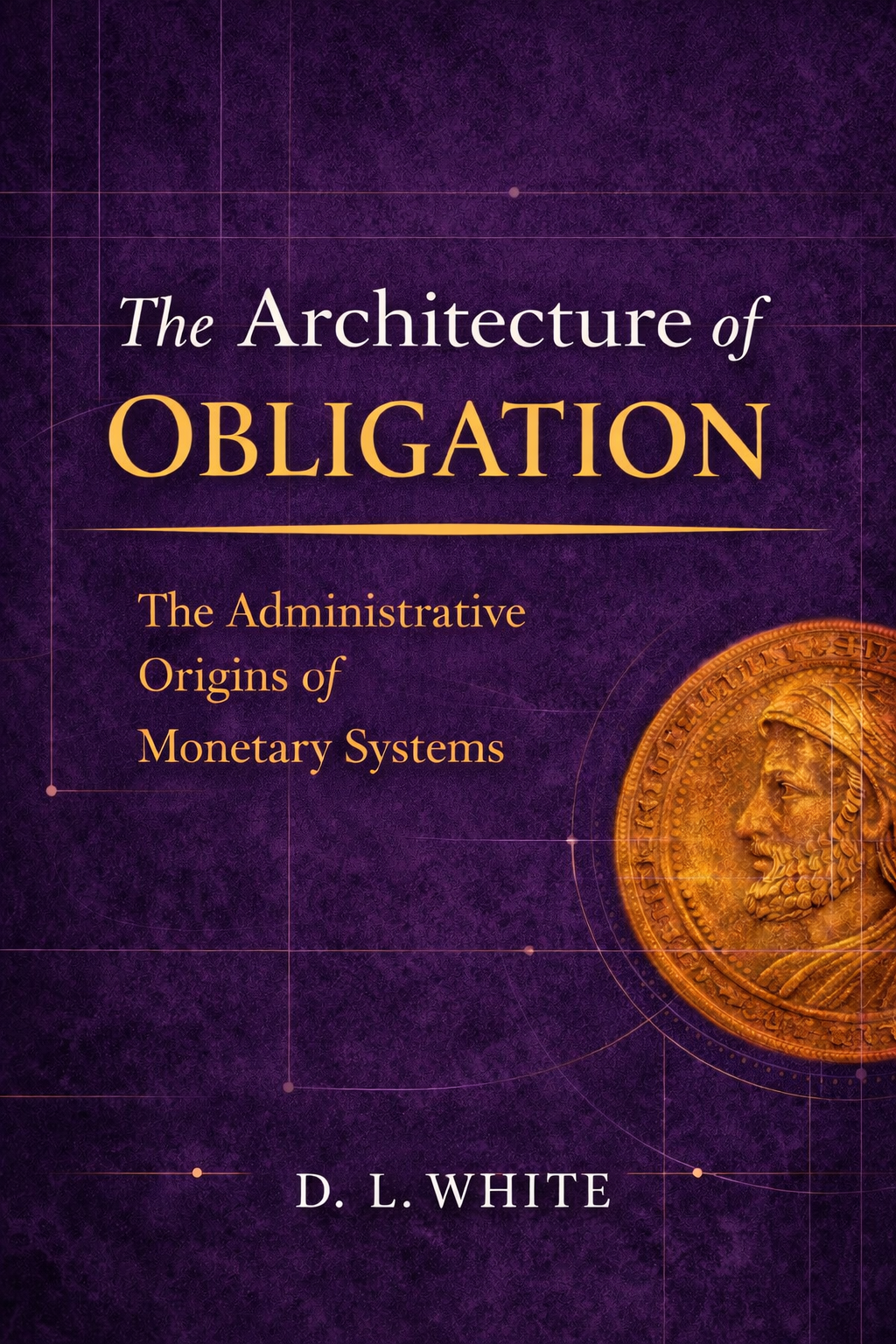
Money is often explained as a neutral tool of exchange, a spontaneous market innovation, or a legal decree. Money and State Power starts somewhere else: with a recurring problem faced by governing authorities—how to convert episodic coercion and ad hoc provisioning into durable, administratively enforceable claims.
Drawing on historical institutionalism, D.L. White develops an Extractive State Theory of Money (ESTM): a framework that treats durable monetary systems as administrative institutions for rendering obligations legible, measurable, transferable, and enforceable across time, distance, and populations. In this view, money is not primarily a “thing,” but a system of inscription—an architecture for converting heterogeneous obligations into comparable units that can be carried forward, reassigned, and compelled.
The book traces this mechanism across a long arc—from early law codes and accounting regimes, through fiscal-military rivalry, public debt, colonial administration, and industrial discipline, to contemporary compliance, financial surveillance, algorithmic classification, and digital monetary infrastructure. The epilogue resists utopian prescriptions, asking instead how monetary power has historically been constrained, redirected, or negotiated—and what forms of autonomy remain plausible as legibility approaches automated continuity.
For readers interested in heterodox political economy, state capacity, monetary history, institutional legibility, and the deep structure beneath modern money.
The Great Realignment: Power, Money, Greed & Bitcoin
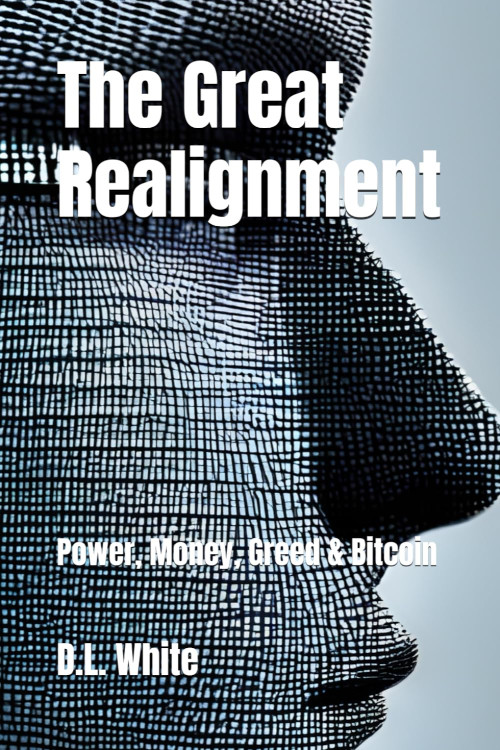
The Great Realignment: Power, Money, Greed and Bitcoin delves into the philosophical and practical implications of how power structures developed in competition based societies. This thought-provoking work examines the flaws and complexities of competitive resource capture economies, highlighting how intricate rules, incentives, and authority structures have evolved over time.
Drawing from historical and contemporary examples, it scrutinizes the chaotic and often self-perpetuating nature of power and wealth, offering a compelling argument about Bitcoin’s role as a remedy for systemic corruption and inefficiency. It challenges readers to rethink fundamental concepts of power, authority, and cooperation, presenting Bitcoin as a novel and sophisticated solution to deeply entrenched societal dynamics.
This is a must-read for anyone interested in understanding the intersection of economics, human behavior, and the transformative potential of Bitcoin’s unique role as a truly inalienable form of decentralized property.
- Buy Here (paperback)
- Buy on Amazon (paperback or Kindle)
- Read for free (NOSTR)
 D.L. White
You must be logged in to post a comment.